


 中文简体
中文简体 Författare: Administration Datum: 2026-06-22
What Should You Look for When Choosing a Motor for Your Car Wash System?
Why the Motor Is the Most Critical Component in Any Car Wash System
Every function in a car wash — from high-pressure spray nozzles to rotating brushes, blower dryers, and conveyor drives — depends on a motor performing reliably under demanding conditions. Water, detergent mist, temperature swings, and continuous start-stop cycling put motors under stress that standard industrial motors are not always designed to handle. Selecting the wrong motor does not just mean premature failure; it means downtime during peak revenue hours, expensive emergency replacements, and in some cases damage to the surrounding equipment. This guide walks through every key factor you need to evaluate before purchasing a car wash motor, whether you are outfitting a new facility or replacing a unit in an existing system.
Understanding the Main Motor Types Used in Car Wash Equipment
Car wash applications use several distinct motor technologies, and each suits a different set of equipment and operational demands. Choosing the right type is the foundational decision that all other specifications build on.
AC Induction Motors
AC induction motors are the industry standard for most car wash equipment, including high-pressure pumps, conveyor systems, and blower dryers. They are robust, widely available, straightforward to maintain, and compatible with variable frequency drives (VFDs) for speed control. Most car wash motors in the 1 HP to 30 HP range are single-phase or three-phase AC induction units. Three-phase motors are preferred wherever a three-phase supply is available because they run more smoothly, start more reliably under load, and have a longer service life than single-phase equivalents of the same rating.
Permanent Magnet DC Motors
DC motors offer precise speed control and high torque at low speeds, making them suitable for applications like brush drive systems where speed variation is operationally important. They are less common in modern installations because brushless AC alternatives with VFDs have largely matched their controllability while eliminating the maintenance burden of brush replacement. If your equipment specifies a DC motor, replace it in kind; retrofitting to AC without engineering review can cause compatibility issues with existing control boards.
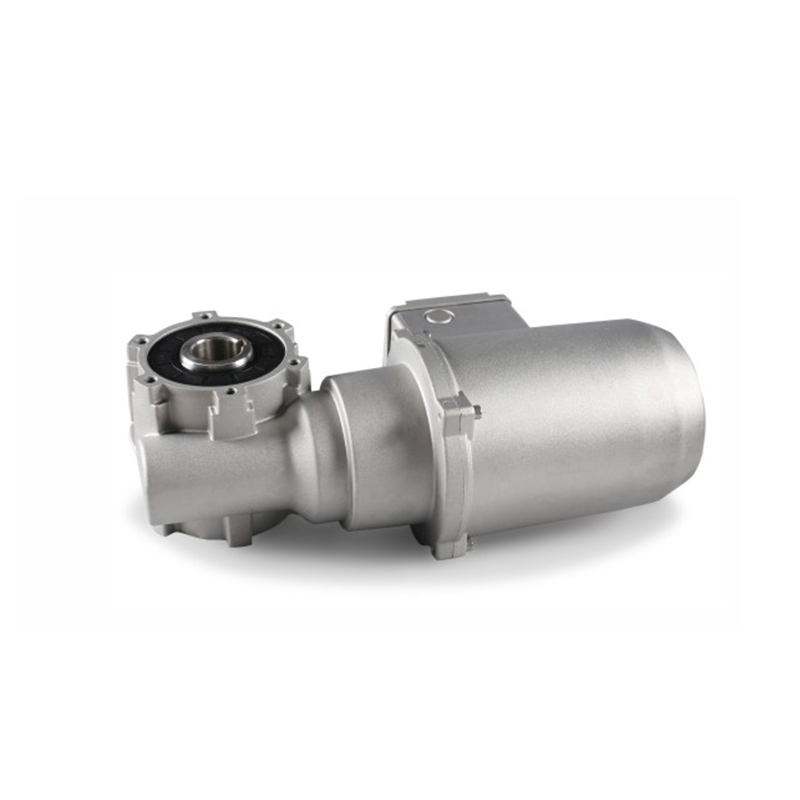
Brushless DC (BLDC) and ECM Motors
Electronically commutated motors (ECM) and brushless DC motors are increasingly appearing in newer car wash equipment, particularly in energy-efficient blower systems and reclaim pump applications. They offer significantly higher energy efficiency than traditional AC induction motors — often 20 to 30 percent more efficient in partial-load operation — and have no brushes to replace. The trade-off is higher upfront cost and the need for compatible controllers, which are proprietary in many OEM installations.
Power Rating: Matching Horsepower to the Application
Horsepower (HP) or kilowatt (kW) rating is the specification most buyers focus on first, and for good reason — an undersized motor will trip its thermal overload protection repeatedly and fail prematurely, while an oversized motor wastes energy and may not be compatible with existing electrical infrastructure. The right power rating depends entirely on what the motor is driving.
The following table gives typical power ranges for common car wash motor applications as a starting reference. Always verify against your equipment manufacturer's specifications before purchasing.
| Application | Typical Power Range | Common Phase |
| High-pressure pump | 5 HP – 20 HP | Three-phase |
| Blower / dryer | 5 HP – 30 HP | Three-phase |
| Conveyor drive | 1 HP – 5 HP | Single or three-phase |
| Brush drive (rollover) | 1 HP – 3 HP | Single or three-phase |
| Reclaim / transfer pump | 0.5 HP – 3 HP | Single-phase |
| Chemical dosing pump | 0.25 HP – 1 HP | Single-phase |
When replacing an existing motor, match the horsepower rating exactly unless you have engineering confirmation that a different rating is compatible. Do not assume that "more power is safer" — an oversized motor can overload wiring, trip breakers, and cause control system faults.
Duty Cycle and Service Factor: The Specifications That Define Reliability
A motor's duty cycle rating defines how long it can operate continuously before requiring a rest period to dissipate heat. Car wash equipment — particularly in tunnel and express exterior formats — runs motors in patterns of frequent starts, stops, and direction reversals throughout an operating day. This puts far more thermal stress on a motor than a standard industrial application running at steady state for hours at a time.
For most car wash drive applications, specify a motor rated for continuous duty (S1 duty class in IEC terminology), not intermittent duty. Continuous duty motors are designed to reach thermal equilibrium under full load and maintain it indefinitely, making them far more appropriate for high-volume operations. Additionally, look for a service factor of at least 1.15, which means the motor can handle up to 15 percent above its nameplate horsepower for short periods without damage — a useful buffer during peak loads or when a brush encounters resistance from a large vehicle.
Enclosure Type and Ingress Protection Rating
The car wash environment is one of the most hostile environments a motor can operate in. Water spray, detergent mist, foam, and in cold climates, road salt residue, are present in varying concentrations throughout the wash bay. Selecting an enclosure type matched to the actual exposure level of the motor's installation position is non-negotiable.
- TEFC (Totally Enclosed Fan Cooled): The baseline standard for most car wash motor installations. The motor is sealed against moisture and particulate ingress, with external fan cooling. Suitable for most pump and conveyor applications where the motor is not directly in the spray zone.
- TENV (Totally Enclosed Non-Ventilated): Used in smaller motors where a cooling fan is not practical. Appropriate for chemical pump drives and other low-power applications in wash-down environments.
- Wash-Down Duty / IP55 or IP56 rated: For motors installed directly in the wash bay, especially brush drives and gantry motors on rollover systems, a wash-down duty motor with stainless steel hardware, sealed bearings, and an IP55 or higher ingress protection rating is essential. Standard TEFC motors will corrode rapidly in direct spray environments.
- Explosion-proof enclosures: Required only in facilities handling flammable chemicals in concentrations that could reach ignition thresholds — not a standard car wash requirement, but relevant to some specialty chemical storage areas.
Insulation Class and Bearing Specification
Motor windings are rated by insulation class, which defines the maximum operating temperature they can withstand. Class F insulation (rated to 155°C) is the current standard for motors intended for demanding applications, and Class H (180°C) is preferable for high-duty-cycle car wash motors where thermal buildup is a real concern. Avoid Class B motors (rated to 130°C) in car wash applications — they offer insufficient thermal headroom for the start-stop cycling typical of this environment.
Bearing selection matters equally. Standard open bearings allow moisture and detergent contamination that rapidly accelerates wear. Specify motors with sealed or shielded bearings (2RS or ZZ designation) pre-lubricated for extended service intervals. For wet or chemically aggressive environments, stainless steel bearings provide further protection at a modest cost premium. Some manufacturers offer motors specifically configured for car wash duty with double-sealed bearings and corrosion-resistant shaft coatings — these are worth the additional cost in high-volume operations where bearing failure causes significant downtime.
VFD Compatibility and Speed Control Requirements
Variable frequency drives (VFDs) are widely used in modern car wash systems to control motor speed in conveyor drives, brush systems, and pump pressure regulation. If your system uses or is planned to use a VFD, the motor must be specified as inverter-duty rated. Standard AC motors run on VFD-generated waveforms can experience insulation breakdown due to voltage spikes, leading to premature failure. Inverter-duty motors include reinforced winding insulation and are rated to handle the electrical characteristics of VFD output without degradation. The additional cost of an inverter-duty motor is minimal compared to the cost of replacing a failed motor or — worse — a damaged VFD.
OEM Replacement vs. Aftermarket: Making the Right Call
When replacing a failed motor, you typically have a choice between an OEM replacement sourced from the equipment manufacturer and an aftermarket motor matching the core specifications. OEM motors guarantee dimensional and electrical compatibility and often come with manufacturer support, but they carry a significant price premium and may have long lead times if sourced internationally. Aftermarket motors from reputable manufacturers — NEMA-frame standard motors from brands like WEG, Leeson, or Marathon are commonly used in the car wash industry — can match or exceed OEM specifications at considerably lower cost and with faster local availability.
When evaluating an aftermarket replacement, verify the following against the OEM nameplate data before purchasing:
- Horsepower and speed (RPM) rating
- Frame size (NEMA or IEC) and shaft dimensions
- Voltage, phase, and frequency rating
- Enclosure type and IP rating
- Rotation direction (some applications require specific single-direction or reversible motors)
Building a Reliable Motor Selection Process
The best car wash motor is not the cheapest one available in the right horsepower — it is the one that matches your specific application's duty requirements, environmental exposure, electrical infrastructure, and service life expectations. Start every motor selection decision with the equipment's nameplate data and the manufacturer's motor specification sheet. From there, evaluate enclosure type for the installation environment, confirm duty cycle and insulation class ratings, verify VFD compatibility if applicable, and compare OEM versus aftermarket options on price, availability, and technical support. A motor chosen systematically against these criteria will consistently outperform one chosen on price alone, and in a revenue-generating car wash facility, reliable uptime is always worth the investment in specification quality.

-
Feed-back
Relaterade produkter


Copyright© Hengye Intelligent Drive (Hangzhou) Co., Ltd. Alla rättigheter förbehållna

Hotline:0086-15869193920
Tid:0:00 - 24:00
